
Building a good cricket ground starts with one decision that shapes everything else: the surface. Get the turf wrong and it doesn't matter how nice the pavilion looks or how well the boundary rope is laid out.
The turf decides how the ball comes off the pitch, how long the ground survives daily use, and how much time and money you'll spend keeping it playable.
If you're putting this together for a school, an academy, a club, or a commercial ground, picking the right Cricket Turf Manufacturer is arguably the single biggest call in the whole project.
A manufacturer worth trusting brings decent materials, installers who know what they're doing, and the kind of support that doesn't vanish the moment the invoice is paid.
The manufacturer worth your money is the one whose turf has actually been tested, whose construction process treats drainage as non-negotiable, and whose past projects you can walk out and look at yourself.
Choosing a Cricket Turf Manufacturer
No two grounds have the same requirements. Size, location, expected level of play, even local rainfall, all of it changes what "good turf" actually means for your project.
A manufacturer worth hiring should be able to talk you through products, installation, and materials without dodging the harder questions. Get that part right and you're most of the way to a facility that stays safe, looks decent, and doesn't fall apart in three years.
Choose a Manufacturer with Industry Experience
Experience isn't just a nice-to-have here. A manufacturer who's spent years on cricket grounds specifically, not just sports surfaces in general, has seen the ground conditions that trip up newcomers. They know how a coastal site drains differently from an inland one.
They know what players actually notice when the bounce is slightly off. And when something unexpected comes up mid-project, which it usually does, an experienced team fixes it instead of stalling.
Check the Quality of Turf Materials
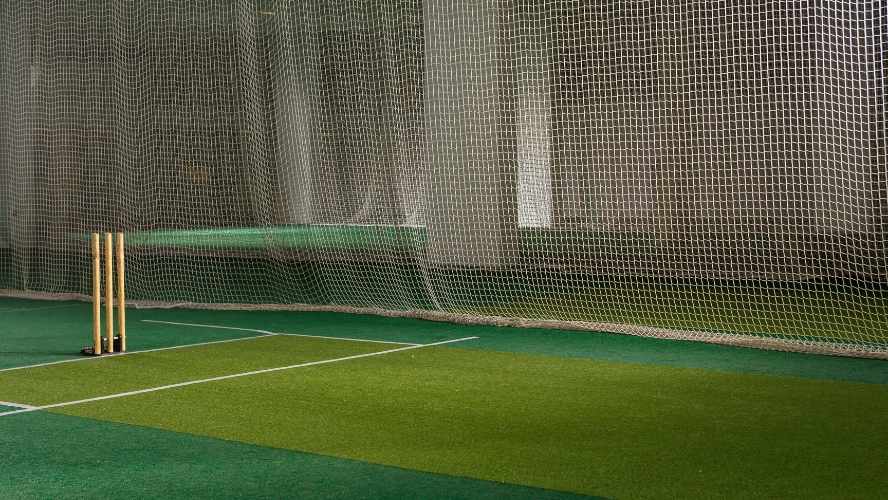
Materials aren't the whole story, but they're a huge chunk of it. Cricket turf typically runs a shorter pile than most other sports surfaces, usually somewhere between 10 and 20 millimetres, because a shorter pile gives you a firmer, faster surface with bounce that's actually predictable .
Beyond pile height, look at the backing and the fibre quality. Cheap fibre flattens out fast. Good fibre holds its shape through a season of hard use, and that's the difference between a ground that still plays true in year three and one that doesn't.
Review Their Cricket Turf Construction Process
There's a lot happening underneath a cricket surface that nobody sees once the turf goes down. Proper Cricket Turf Construction means the ground gets prepared correctly, drainage gets installed before anything else, and the base layer gets built to actually support the surface above it. Skip a step here, or rush it, and you'll be dealing with the consequences for years, not weeks.
Look for Professional Installation Services
Great turf laid badly is still bad ground. Professional installers work to real standards, not guesswork, so the finished surface ends up level and secure.
Manufacturers worth their reputation test their systems against ASTM F1551, the recognised industry standard for synthetic turf performance, including how well the surface actually drains .
That kind of testing isn't marketing fluff. It's the difference between a ground that floods after rain and one that's playable an hour later.
Ask About Custom Solutions for Your Ground
A school running weekend practice sessions doesn't need the same setup as a stadium hosting league matches. Some clients just want a single practice wicket. Others need a full-size field, or a surface that has to double up for other sports on weekdays.
A manufacturer who actually listens will shape the recommendation around your space and your budget instead of pushing whatever's easiest for them to install.
Evaluate Their Cricket Turf Installation Expertise
Installation is where a lot of projects quietly go wrong. Solid Cricket Turf Installation work means the seams are joined properly, the alignment is careful, and the fixing methods hold up under repeated use, not just for the first few matches. Get this stage right and the maintenance calls drop off dramatically afterward.
Consider Maintenance Requirements
Ask about upkeep before you sign anything, not after. How often does it need brushing? What does an inspection actually involve? Good synthetic turf is built to keep this list short, but every system has some level of upkeep, and you want to know what you're signing up for before the ground is already down.
Check Previous Projects and Customer Reviews
Talk is cheap. What a manufacturer has actually built tells you far more than what they say they can build. Ask to see finished grounds. Read what past clients actually wrote, not just the highlight reel on the website. A pattern of solid feedback across several projects is worth more than any single glowing testimonial.
Choose a Cricket Turf Supplier That Offers Ongoing Support
The relationship shouldn't end the day the installers pack up. A Cricket Turf Supplier worth choosing sticks around for maintenance questions, technical issues, and whatever comes up two years down the line that nobody thought to ask about at the start. That ongoing support is often what separates a ground that stays good from one that quietly deteriorates.
Balance Quality with Long-Term Value
The cheapest quote is rarely the smartest one. Pay a bit more for real materials and skilled installation, and you'll spend a lot less on repairs later. Think of it less as an expense and more as buying yourself out of years of future headaches.
Conclusion
Choosing the right cricket turf manufacturer isn't a small decision, and it shouldn't be treated like one. Experience, decent materials, careful construction, and installation done properly all feed into a ground that's actually safe to play on for years.
Weigh the workmanship, the support after the sale, and what maintenance really looks like, and you'll end up with a facility that holds up. A well-built ground gives schools, clubs, and academies exactly what they're after: consistent play, low hassle, and a surface that doesn't let the players down.



Write a comment ...